

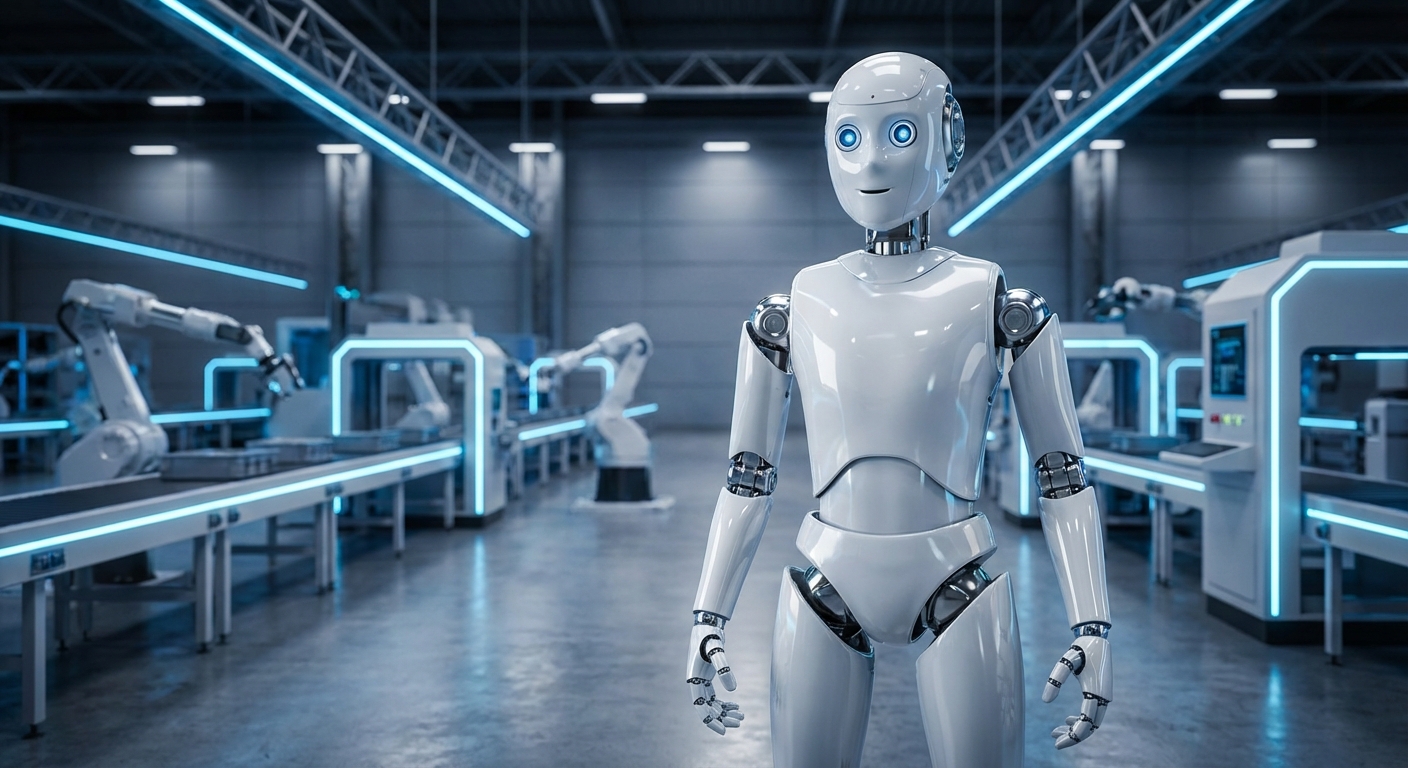
Humanoid Robots of the Future: Are They Friends or a Threat to Our Jobs?
Introduction: A Question That Reflects Hope and Fear at the Same Time
The title “Humanoid Robots of the Future: Are They Friends or a Threat to Our Jobs?” captures one of the most emotionally complex debates in modern technology. Humanoid robots—machines designed to look, move, and interact like humans—sit at the intersection of innovation, imagination, and anxiety. For some, they represent progress, assistance, and a better quality of life. For others, they symbolize job loss, dehumanization, and an uncertain future.
This title works because it does not take a side. Instead, it presents a fundamental question that millions of people around the world are already asking. As robots become more human-like in appearance and behavior, the line between tool and co-worker begins to blur. The idea that machines could walk among us, speak with us, and even replace us at work is no longer science fiction—it is an approaching reality.
From an SEO perspective, the title is highly effective. It combines:
- A high-interest keyword (“Humanoid Robots”)
- A future-oriented hook
- A binary conflict (“Friends or a Threat”)
- A deeply personal concern (“Our Jobs”)
This explanation explores why this title is so powerful, what humanoid robots really represent, and whether they are more likely to become allies or adversaries in the future of work.
Understanding Humanoid Robots: What Makes Them Different?
To understand the implications of the title, it is important to clarify what humanoid robots are.
What Are Humanoid Robots?
Humanoid robots are machines designed to resemble the human body in form and function. They typically include:
- A head and torso
- Arms and hands capable of manipulation
- Legs for walking or balanced movement
- Sensors for vision, hearing, and touch
- AI systems for communication and decision-making
Unlike industrial robots confined to factories, humanoid robots are designed to operate in human environments—homes, offices, hospitals, and public spaces.
Why the “Humanoid” Form Matters
The human-like design of these robots is not just aesthetic; it is functional and psychological.
Functional Advantages
- They can use tools designed for humans
- They can navigate spaces built for human bodies
- They can perform tasks without redesigning infrastructure
Psychological Impact
Humanoid robots trigger strong emotional reactions:
- Familiarity and trust
- Discomfort and fear (the “uncanny valley” effect)
- Anthropomorphism and emotional attachment
This emotional response is what makes the question “Friends or a Threat?” so compelling.
The Rise of Humanoid Robots in the Real World
Humanoid robots are no longer experimental concepts.
Current and Near-Future Applications
- Customer service and reception
- Healthcare assistance and elder care
- Warehouse and logistics support
- Hospitality and retail
- Education and training
As AI, sensors, and mechanical engineering improve, humanoid robots are becoming more capable, affordable, and autonomous.
Why Jobs Are Central to the Fear
The title explicitly asks whether humanoid robots are a threat to our jobs, not just jobs in general.
Why Work Matters
Jobs provide:
- Income and financial security
- Identity and social status
- Purpose and routine
- Human connection
When technology threatens employment, it threatens more than economics—it threatens dignity and stability.
Jobs Most Likely to Be Affected by Humanoid Robots
Humanoid robots are particularly suited for jobs that involve physical presence and interaction.
High-Risk Job Categories
- Retail staff
- Warehouse workers
- Hospitality employees
- Care assistants
- Security personnel
- Manufacturing and assembly workers
In these roles, humanoid robots offer consistency, endurance, and cost efficiency.
Friends of the Workforce: How Humanoid Robots Can Help Humans
The title’s use of the word “friends” suggests collaboration rather than competition.
Augmentation, Not Replacement
In many scenarios, humanoid robots can:
- Assist with physically demanding tasks
- Reduce workplace injuries
- Handle repetitive or dangerous work
- Support aging workforces
Rather than replacing humans, robots can extend human capabilities.
Healthcare and Elder Care: A Clear Case for Friendship
One of the strongest arguments in favor of humanoid robots is their role in healthcare.
Why Robots Are Needed
- Aging global population
- Shortage of healthcare workers
- Rising healthcare costs
How Humanoid Robots Help
- Assist patients with mobility
- Monitor vital signs
- Provide companionship
- Support nurses and caregivers
In these contexts, robots are not taking jobs—they are filling gaps that humans alone cannot manage.
Productivity and Economic Growth
Humanoid robots could significantly increase productivity.
Economic Benefits
- Faster task completion
- Reduced operational costs
- Increased output
- New service models
Higher productivity can lead to:
- Business growth
- Lower prices
- New industries
- Job creation in other sectors
From this perspective, robots are economic partners rather than enemies.
The Threat Narrative: Why People Are Afraid
Despite the benefits, fear remains strong—and not without reason.
Reasons for Anxiety
- Speed of technological change
- Lack of reskilling opportunities
- Unequal distribution of benefits
- Corporate cost-cutting incentives
If companies prioritize efficiency over people, humanoid robots could indeed displace large segments of the workforce.
The Difference Between Job Loss and Job Transformation
A key nuance often missed in the debate is the difference between job elimination and job evolution.
Transformation in Practice
- Retail workers become robot supervisors
- Technicians maintain and program robots
- Managers oversee human-robot teams
- New roles emerge in ethics, safety, and design
Many jobs will change rather than disappear—but change can still be disruptive.
Psychological Impact of Working Alongside Humanoid Robots
Even when jobs remain, the presence of humanoid robots can affect workers psychologically.
Possible Effects
- Reduced sense of uniqueness
- Fear of comparison with machines
- Stress from constant monitoring
- Loss of autonomy
These factors influence job satisfaction and mental health, making the “friend or threat” question deeply personal.
Trust, Authority, and Control in the Workplace
Humanoid robots raise new questions about authority.
Key Questions
- Who controls the robot?
- Can it give instructions to humans?
- Who is responsible for mistakes?
- How transparent are its decisions?
Without clear boundaries, robots could undermine trust and workplace cohesion.
Ethical Concerns Around Human-Like Machines
The more human-like robots become, the more ethical issues arise.
Ethical Challenges
- Treating robots as tools vs. companions
- Emotional manipulation
- Surveillance and data privacy
- Dehumanization of labor
These concerns add to the “threat” perception, even when economic harm is unclear.
The Role of Education and Reskilling
Whether humanoid robots become friends or threats depends heavily on how societies respond.
Importance of Reskilling
- Teaching people to work with robots
- Developing technical and creative skills
- Encouraging lifelong learning
Without investment in education, robot adoption could widen inequality.
Government Policy and Regulation
Public policy will play a decisive role.
Possible Interventions
- Job transition programs
- Robot taxation
- Labor protection laws
- Ethical AI regulations
Strong governance can ensure that humanoid robots enhance human welfare rather than undermine it.
Cultural Differences in Perception
Attitudes toward humanoid robots vary across cultures.
Global Perspectives
- Some societies view robots as helpers
- Others see them as threats to human value
- Cultural narratives shape acceptance or resistance
The global future of humanoid robots will not be uniform.
Why the Question Format Is Perfect for SEO
The title’s question format is a major strength.
SEO Advantages
- Matches how people search
- Encourages debate and sharing
- Increases engagement time
- Appeals to both optimists and skeptics
“Friends or a Threat?” creates a natural tension that keeps readers engaged.
Media Influence and Public Perception
Popular media has shaped how people view humanoid robots.
From Fiction to Reality
- Movies often portray robots as villains
- News headlines emphasize job loss
- Positive stories receive less attention
This background amplifies fear and makes the title feel urgent and relevant.
The Long-Term Vision: Coexistence or Conflict?
The future of humanoid robots is not predetermined.
Two Possible Paths
- Coexistence
- Robots handle physical and repetitive tasks
- Humans focus on creativity, empathy, and leadership
- Conflict
- Rapid automation without social support
- Mass job displacement
- Growing inequality and resentment
The outcome depends on choices made today.
Why “Our Jobs” Makes the Title Personal
The word “our” is critical.
It transforms the debate from abstract economics to:
- Personal livelihoods
- Family stability
- Individual futures
This personalization is why the title resonates so strongly and performs well in SEO.
Preparing for a Human–Robot Workforce
The title implicitly invites preparation rather than panic.
Practical Steps
- Embrace human-robot collaboration
- Invest in adaptable skills
- Support ethical development
- Demand responsible deployment
Being proactive turns fear into agency.
Conclusion: Friends or Threats—The Answer Is Still Being Written
The title “Humanoid Robots of the Future: Are They Friends or a Threat to Our Jobs?” captures a defining dilemma of the coming decades. Humanoid robots are neither purely benevolent helpers nor inevitable job destroyers. They are tools—powerful ones—shaped by human decisions, values, and priorities.
They can be friends:
- When they reduce suffering
- When they enhance productivity
- When they support human dignity
They can become threats:
- When profit outweighs people
- When workers are left behind
- When technology advances without ethics
Ultimately, the future of humanoid robots is not about machines replacing humans. It is about how humanity chooses to integrate intelligence, labor, and compassion in an age of advanced automation.
The question posed by the title does not yet have a single answer—but it is the right question to ask.
Because in the future shaped by humanoid robots, the most important factor will not be what machines can do.










Leave a Reply